Willa Ashford—Drew Black
Match PointWilla Ashford—Drew Black is a relationship shaped by a devastating misidentification: Willa and Drew were longtime friends, but the apparent evidence that he had turned against her was part of Corey Baxter’s attempt to conceal his own crimes. Willa initially believed Drew was the person targeting her; she later learned that Corey had killed Drew and forged the confession that made him appear guilty.
Identity and Earlier Friendship
Willa and Drew had known each other for years and grown up together on the volleyball circuit. Their friendship belonged to a shared sporting world and a long familiarity, not a newly formed alliance. That history made the suspicion against Drew difficult to reconcile with who Willa thought she knew: when she learned he might be trying to harm her, the revelation struck her as horrifying precisely because he had been a trusted presence for so long.
The closeness of their circumstances sharpened the shock. Drew had lived under the same roof as Willa for an entire week, yet she had noticed no signs that he was a killer. The shared lodging did not give her insight into his supposed intentions; instead, it became part of the bitter irony of her initial interpretation. Someone she had known for years could seem to have been beside her all along while remaining unreadable—but, as the later revelation established, this was not the truth about Drew at all.
Suspicion in the Protected House
The threat against Willa unfolded amid heightened security at the beach rental house. Colt Fontaine worried that the exposed houses along Mission Boulevard would be difficult to defend, inspected the rental’s cameras and keypad locks, and planned additional coverage. When a camera alarm showed someone testing the front door, Colt caught an intruder outside. Later, another alert brought Colt, Anja Johansen, and Luca Russo into a coordinated response at the volleyball-court fence. These incidents established a real atmosphere of intrusion and danger, but they did not by themselves identify Drew as the attacker.
That atmosphere affected how Willa understood the possibility of betrayal. When Colt warned her that someone was trying to break in and ordered her to stay away from the windows and remain in the room, her fear turned to concern that the intruder might harm him. The danger was not abstract: Colt was confronting an unknown person while Willa waited inside. In this environment, the eventual belief that a longtime friend was responsible could take hold with devastating force, even though the supposed confession supporting it would prove fraudulent.
Colt’s own judgment also illustrates how misleading the appearance of Drew’s character was. He had detected no antagonism toward Willa; if anything, he had thought Drew might have a crush on her. Colt later regretted that he had not recognized a threat, but this retrospective self-blame arose from the false account that Drew had been the attacker. The gap between suspicion and evidence matters: the story first presents Drew as the answer to Willa’s danger, then reveals that the apparent answer was manufactured.
The False Confession and Its Motive
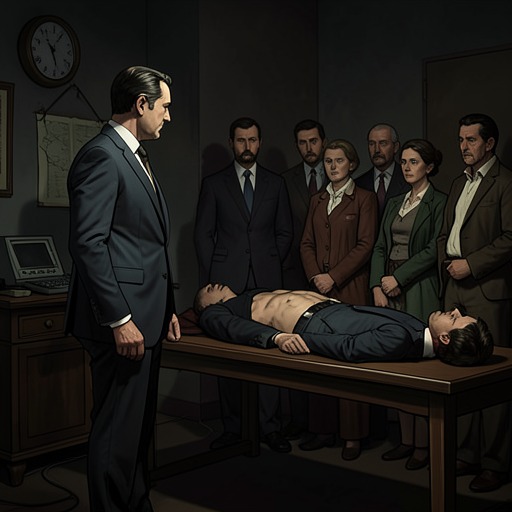
After Drew’s death, Colt saw a typed note presented as Drew’s confession. It claimed that Drew had tried repeatedly to make Willa stop playing volleyball, including sending threatening notes and blowing up his own truck, and that he had shot her when those attempts failed. The note also claimed responsibility for other killings. Its account transformed a longtime friend into a serial killer who had supposedly pursued Willa because he wanted her to leave the sport.
The note supplied a personal motive as well as a criminal narrative: it said Drew had been in love with Colleen Sherman and saw Willa’s success with a new partner as a betrayal of Colleen’s memory. The underlying affair between Drew and Colleen was real. Colleen later explained that she had intended to tell Corey about the affair during a sailing trip, before Oskar Latu’s men abducted her. But the existence of the affair did not authenticate the confession or establish that Drew had attacked Willa. Corey later acknowledged that he had killed Drew and framed him, exposing the note’s account of Willa’s attempted murder as part of that deception.
Exposure and Meaning of the Betrayal
The truth emerged when Willa confronted Corey, accusing him of killing Drew and making him appear responsible through the confession letter. Corey admitted that Drew had discovered the picture Oskar had sent and was going to tell Willa; Corey claimed he had acted because he feared Colleen would be killed. He also admitted trying to make Willa quit, then resorting to more drastic measures when she did not. His explanation shifted responsibility onto Willa while presenting his violence as something done for Colleen, but it did not undo the central fact: Drew had been murdered and used as a scapegoat.
The reversal changes the meaning of Willa’s earlier horror. She had believed that years of friendship concealed a killer, and that Drew had lived beside her while secretly trying to end her athletic career. In fact, the confession turned the history of that friendship into a tool for deception. Drew’s death deprived him of the chance to answer the accusation, while the false account directed suspicion away from Corey and made Willa’s knowledge of her longtime friend seem inadequate to protect her.
The relationship’s lasting significance lies in this collision between genuine history and imposed suspicion. Willa’s friendship with Drew was not shown as a bond that gradually became openly hostile; it was recast after his death through a document Corey had fabricated. The revelation restores the distinction between Drew’s actual place in Willa’s life and the guilty identity assigned to him, while showing how Corey exploited trust, grief, and the plausibility of a confession to disguise his own violence.